Laser Tattoo Removal Pre Care
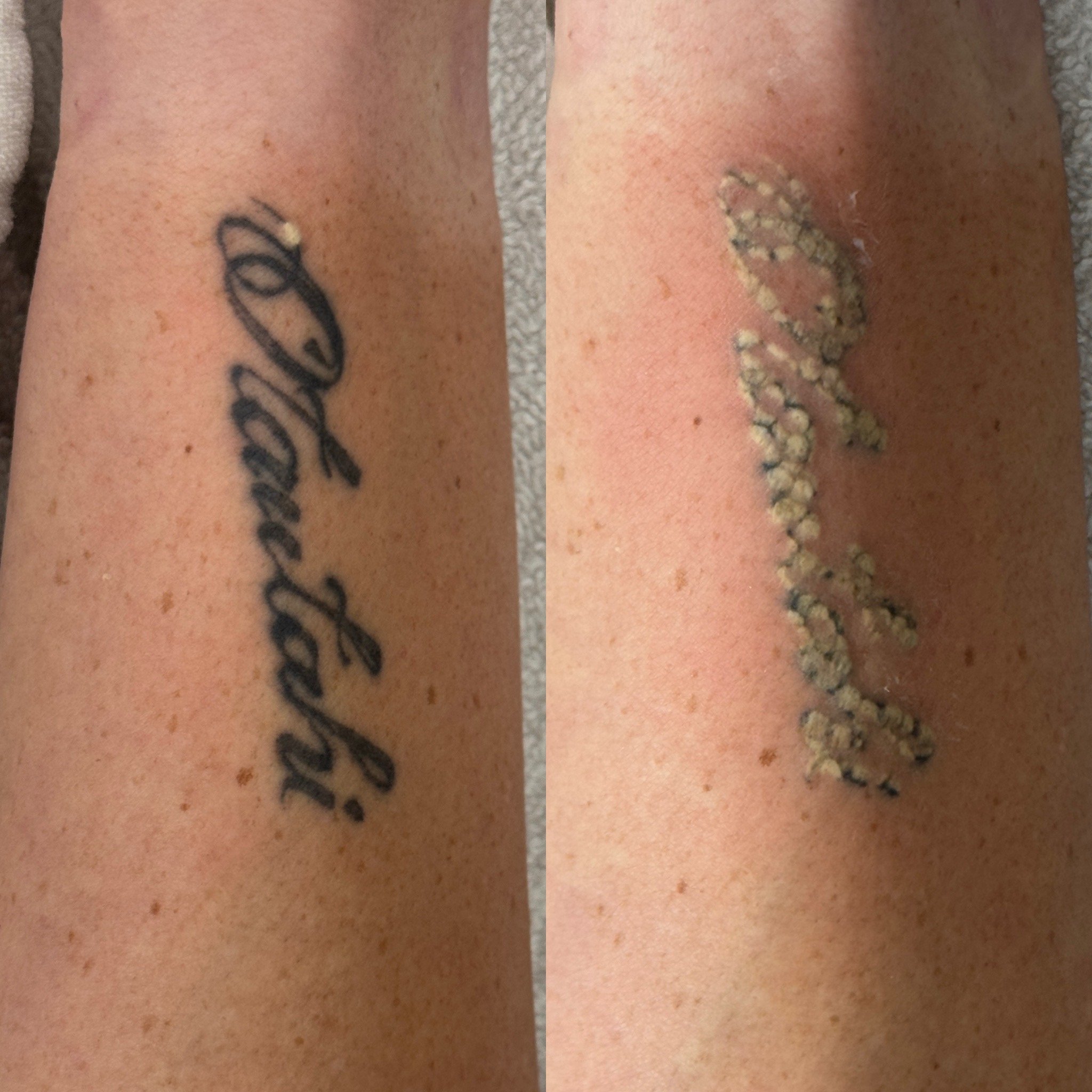
Tattoo frosting is normal for laser removal
Pre Care Instructions
To ensure a safe and effective laser tattoo removal treatment, please follow these pre-care instructions carefully. These steps help reduce risks and prepare your skin, as required by New Zealand’s health and safety laws.
Complete Medical History: Inform your clinic of all medical conditions (e.g., diabetes, epilepsy, skin cancer history), medications, and allergies. If you have conditions like bleeding disorders or recent isotretinoin use, you may need a doctor’s clearance.
Avoid Sun Exposure: Do not expose the tattooed area to sun, tanning beds, or self-tanning products for at least 4 weeks before treatment. Tanned skin increases the risk of burns or pigmentation changes.
Shave the Area: If the tattooed area has hair, shave it closely 24 hours before your appointment. Do not wax or pluck, as this can irritate the skin. (Do not shave eyebrows for brow tattoo removal)
Clean Skin: Arrive with the treatment area clean and free of makeup, lotions, perfumes, or deodorants. The clinic will use an antiseptic (e.g., chlorhexidine) to further clean the area.
Avoid Irritants: Stop using skin products with retinoids, acids (e.g., glycolic acid), or abrasives on the treatment area for 7 days before your session to prevent irritation.
Patch Test: Attend a patch test 24–48 hours before your first full treatment to check how your skin reacts to the laser. This is mandatory under Auckland safety rules (best practice in the rest of NZ). As we are in Christchurch we can patch test at the time of your appointment but if you would rather come in before please let us know.
Stay Hydrated and Healthy: Drink plenty of water and avoid alcohol or smoking for 24 hours before treatment, as these can affect skin healing.
Inform About Skin Changes: Report any cuts, rashes, moles, or infections in the tattooed area to your clinic, as these may need to be avoided or require medical clearance.
Wear Loose Clothing: On the day of treatment, wear loose, comfortable clothing that won’t rub against the treated area.
Understand Aftercare: Review the aftercare instructions provided by your clinic so you’re ready to care for your skin post-treatment